|
| |
Baracoa
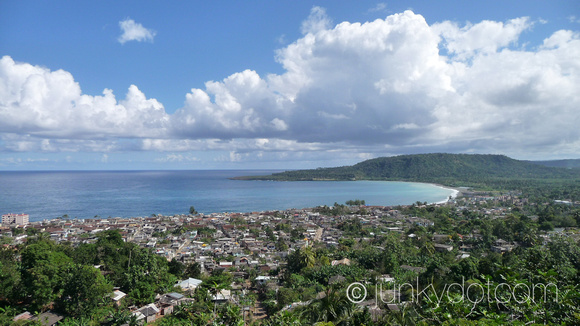
Baracoa ... I
just can say one thing ...
Go there and see how beautiful Cuba can be!
The first Cuban place founded by the Spaniards in 1512 by Diego Velazquez.
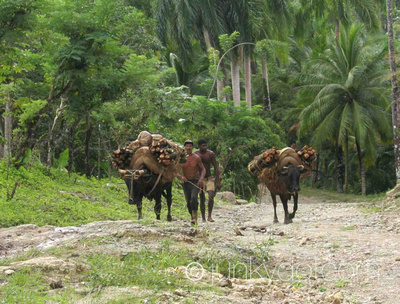
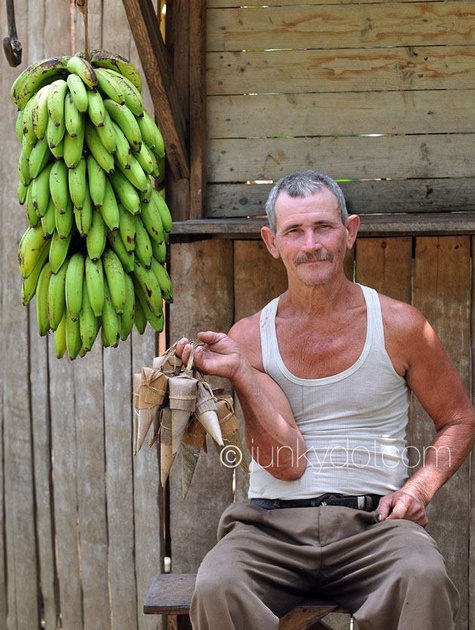
Fantastic nature areas lots of palm-, chocolate-, and banana trees. See how the Baracoa women do their laundry in the river Rio Joa.
The city itself contains bits of an impressive system of fortifications that was built in the 18th century. Matachin Fort (now the Municipal Museum of Baracoa). Punta Fort and Sanguily Fort (now the El Castillo Hotel) are well worth seeing.
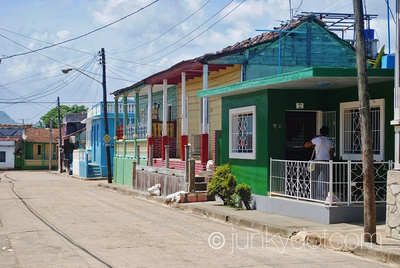
Casas Particullares in Baracoa |
|
Baracoa is a land of great rainfall and many rivers. The lush vegetation, the high mountains covered with long-lived forest, the customs that have been handed down from one generation to another and the appearance of a town that has remained unchanged over a long time are, undoubtly, key ingredients in the special attraction of this tiny city on the shores of Miel (Honey) Bay.
Coconut trees; the fast-flowing Toa River; and the Yunque (Anvil) of Baracoa a high mountain with a flat top that can be seen from far out at sea and which, because of its enormous size and singular shape, was a natural landmark for seamen are all symbols of nature in the area.
 The town is quiet, with some attractive architecture-several houses dating from the 19th century and a system of colonial fortifications that includes Matachin Fort (now a museum of local history, the natural scenes and archeology) and La Punta Fort (now a restaurant). The town is quiet, with some attractive architecture-several houses dating from the 19th century and a system of colonial fortifications that includes Matachin Fort (now a museum of local history, the natural scenes and archeology) and La Punta Fort (now a restaurant).
Baracoa parish church contains a cross that is silverplated at its extrimities and is a real treasure- the Parra Cross, the only remaining one of the 29 that Columbus had erected on shore during his voyages. Explore the beautiful rivers in the area: the Duaba, the Miel (Honey), the Yumuri and the Toa. This last is the largest river in Cuba; it is fed by 71 tributaries and has several waterfalls, such as El Saltadero, over 55 feet (17 m) high. Go boating between the tall cliffs at the mouth of Yumuri River. Inland, the Yunque de Baracoa (Baracoa Anvil) is a mountain that rises to 1765 feet (538 m) above the sea level. Named for its shape, it dominates Baracoa's skyline. The Cuchillas del Toa is a preserve of the biosphere.
Many people believe that Ivory-billed Woodpeckers (Campephilus principalis bairdii), whch has been declared extinct, still live there. It also includes the largest rainforests in Cuba, which contain precious wood trees and several valuable species of animals, such as the solenodon; a tiny frog that is thought to be the smallest in the world; and Cuban land snails (Polymita picta), that are the most colorful ones on earth. Here too, you can see over 900 species of endemic flora, including around 360 that are found only in this area.
Baracoa also has over 50 important archeological sites. According to the experts, it was the largest center of development of Cuban-Indians' culture. Moreover, this is the only place in Cuba whose inhabitants have features showing their Indian heritage.
Visit the Duaba Farm for a delicious Cuban lunch after seeing how cacao is turned into chocolate.
Or go up in the mountains of Guantanamo Province to see the Stone Zoo - perhaps the only one of its kind in the world - where Angel Inigo, a farmer who taught himself how to sculpt, has worked on stones in their original places, creating around 400 stone animals.
From Baracoa you can also go on an excursion to Maisi, at the easternmost tip of Cuba, to see its impressive marine terraces, which are among the largest in the world. This is an area of caves and cactus where you'll be surprised by the quick change from the rainiest area in the country to the driest one, which is known as Cuba's semi-desert. On the way back to the capita of the province, stop off at the Malones Lookout Point for a good view of the Guantanamo Naval Base |
|
Location and how to get there
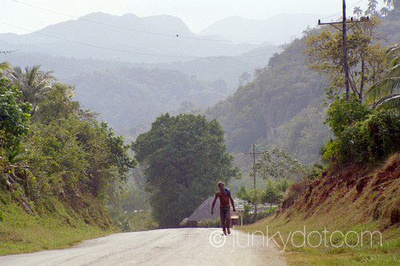
Baracoa is on the northern coast of Guantanamo Province, over 620 miles (1000 km) east of Havana. You can get there by flying Gustavo Rizo Airport, which handles small and medium-sized planes, or by driving a rental car along the Moa-Baracoa highway or the La Farola viaduct, which links Baracoa with regions to the south. This last is an impressive feat of engineering that winds among mountains 1968 feet (600 m) above the sea level and has nine bridges that hang out over precepts.
Carretera de La Farola
Built in the 60´s and named after the most spectacular mountain of the area through which it runs, it is still the only road to Baracoa. Considered one of the best works of engineering in Cuba, it has a ”Central” sightseeing site, but in itself it is an uninterrupted watchtower to sights you will never forget. |
Beaches
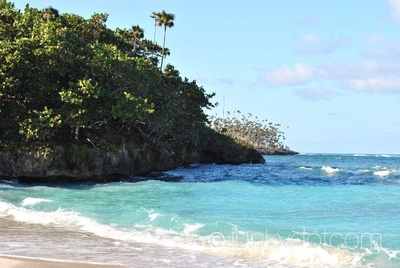
Playa Maguana
A few kilometers west of Baracoa, the beach is a little cove where there is a rustic hamlet with very few inhabitants. Bar and restaurant services in the midst of the luxurious vegetation.
Playa Nibujón
West of Baracoa, by the river of the same name, and used by locals. There are no tourist facilities, but its main attraction is due to the mountain at its back that makes it unforgettable for those preferring Nature.
Activities include swimming and sunbathing at the beach in complete privacy, swimming or boating on any of the many rivers, and excursions along the coast and inland. Because of its climate, its unspoiled natural attractions and its immense tranquillity, Baracoa is a perfect place for getting a really good rest. |
To Do in Baracoa |
Catedral de Nuestra Senora de la Asuncion
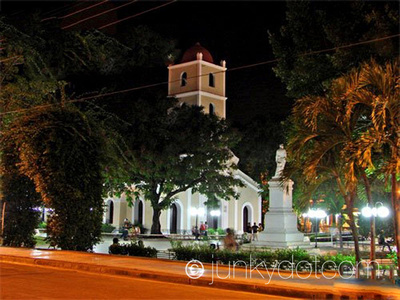 Maceo #152, Baracoa, Cuba Maceo #152, Baracoa, Cuba
Unquestionably, the most interesting relic in Baracoa is the Parra Cross which, it said, is one of the 19 that Christopher Columbus left in the New World as witness to the arrival of Christianity.
The cross is exhibit in Our Lady of Assumption Parish Church. It is he oldest symbol of Catholic religion in the New World. |
Carnaval
The first week of April
Baracoa, Cuba
El Castillo de Seborruco
Hotel El Castillo
Baracoa's highest fort built in 1739 by the Spaniards. Nowadays Hotel El Castillo
Centro de Veneteranos
Marti #216, Baracoa, Cuba
Photos about the Revolution and the Angola war
Cueva El Potrerillo No. 2
Monumento
Baracoa, Cuba
Cueva Oscura
Monument
Carretera de Baracoa a Maisí, Baracoa, Cuba
El Primer Malecón del Caribe
Sitio de interés, Baracoa, Cuba
Fabrica de Chocolate
Factory
Not open for public
Fabrica de Cucuruchu
Factory
Not open for public but you can buy this local sweet snack on-site
Fabrica de Tabacos Manuel Fuentes
Marti #214, Baracoa, Cuba
Fuerte Matachin
Spanish Fort
Jose Marti y Malecon, Baracoa, Cuba
Open: 8am - 2 pm
Fuerte de la Punta
Fort
Nowadays a government owned restaurant run by Gaviota
Museo Arqueologico La Cueva del Paraiso
Museum
800 meters southeast from Hotel El Castillo
Open: 8am - 5pm
Located in a serie of caves showing Taino Indian history
Museo Municipal de Baracoa
Fuerte Matachín
Jose Marti y Malecon, Baracoa, Cuba
Open: 8am - 2 pm
The Municipal Museum contains archeological exhibits dating from the period before Columbus stumbled on the area and many photos, documents and other exhibits related to local history, from its founding up to the present.
Miguel Angel Castro Machado
The town of Baracoa is and has been full of eccentric and interesting characters. The most interesting one during this generation is poet and historian Miguel Angel Castro Machado, Historian, founder of Museo Matachin, raconteur extraordinaire, loyal friend. He knows more about the ecology, history, geography and character of this town than any one else.
Parque Natural Majayara
Hiking
Southeast out of the center of Baracoa
Poder Popular
Antonio Maceo #137, Baracoa, Cuba
Municipal government building
|
|
| |
|
©Cuba-Junky | KvK / CC The Hague The Netherlands: 27315058
|
|
|